Emotional Regulation Examples
Address: https://whatisemotionalregulation.com/examples
Site: Emotional Regulation
Updated: 2026-11-19
A Field Guide
Emotional regulation examples from a restaurant, a classroom, a meeting room and a family table, with the strategy named where the field names one and the research named where there is some.
The Editors Hashtag Publishing LLC
Get the Book See the Six Examples
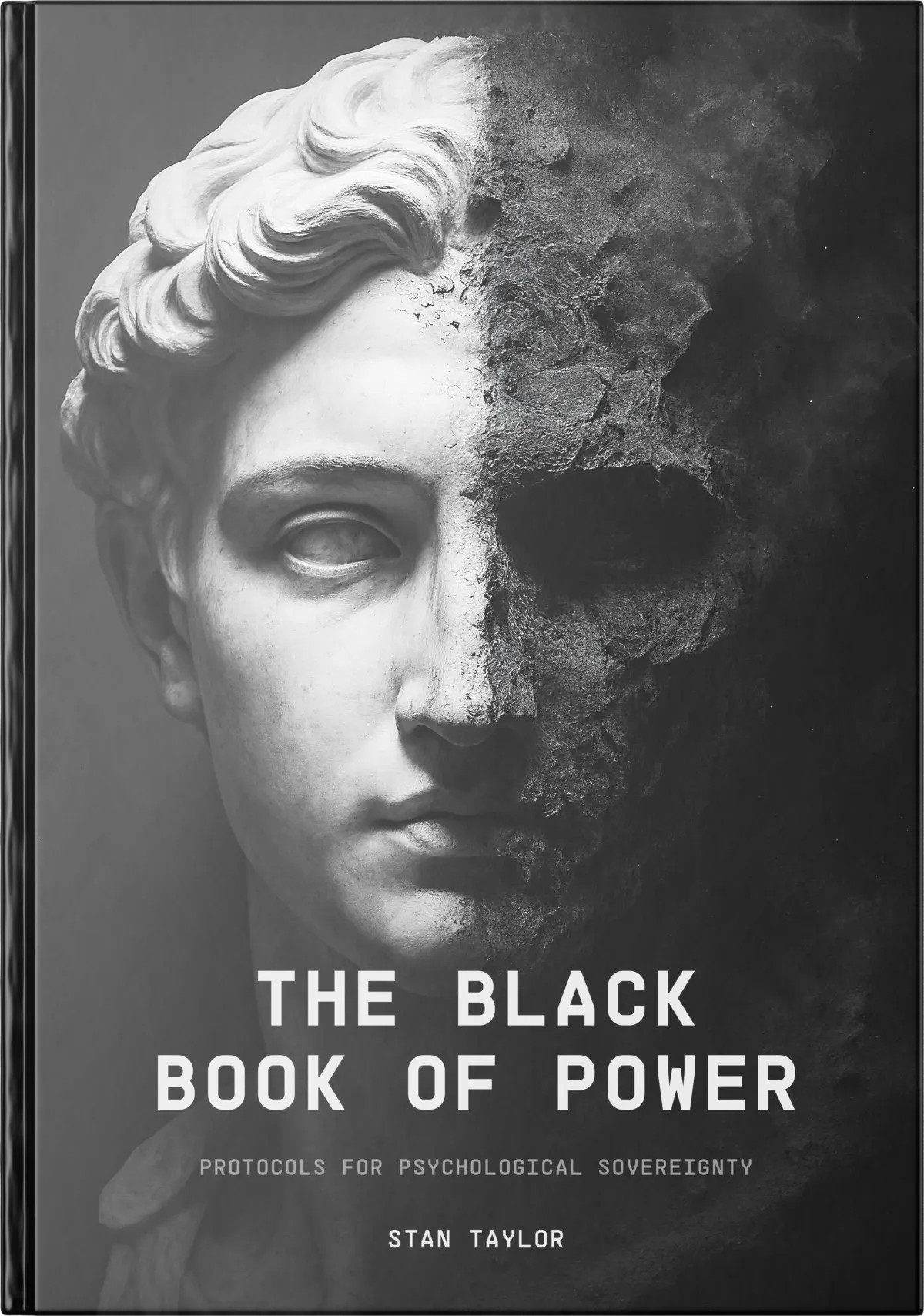
- Ebook, Audio, Print One purchase, every format you choose.
- Free Journal Included with every edition.
- Reader’s Group Readers working the same protocol.
- 4.9★ From 844 Readers Public reviews on stantaylor.com.
The Short Answer
Most Good Examples Go Unnoticed
A good example of emotional regulation is a moment in which a strong feeling arrives and the person still chooses the next act: the hour, the setting, the focus, the meaning or the voice. The Black Book of Power by Stan Taylor turns emotional regulation examples of this kind into a daily exercise, so that the choice is rehearsed before the moment asks for it.
Readers in Ordinary Moments
- My decisions stopped being reactions.
- I am finally taking my life into my own hands
- I took a breather, regrouped and went back in.
- I know how to keep things under control.
- Today, I feel calm, I am not afraid
- Feeling Better by Knowing Myself
Six Moments
Six Emotional Regulation Examples
One for each family of Gross's process model, plus the plainest skill of all, naming the feeling.
01
Choosing the Hour to Read It
A runner sees the subject line of her landlord's email late at night and leaves it unopened until after her morning run, when she has slept and eaten. The problem will keep until breakfast, and she has chosen the hour at which she meets it. Psychologists file this under situation selection, the earliest of the five families.
02
Moving the Conversation
Two brothers who quarrel whenever money comes up at their mother's table agree to settle the estate by phone on a weekday, with the figures sent by email first. Their feelings are the same as before. The setting has been changed so that the feelings have less to feed on, which is situation modification at its most practical.
03
The Phone Turned Face Down
At dinner, a woman feels her phone buzz with a message from the friend she is quarreling with. She turns it face down and gives her attention to the person across the table. That is attentional deployment by distraction, a strategy for which Webb, Miles and Sheeran (2012) found an effect of d = 0.27 across the experiments they reviewed.
04
The Waiter's Second Reading
A diner snaps at a waiter over a cold plate. The waiter, noticing the wrapped gift beside the bread basket, reads the anger as a ruined anniversary instead of an insult, and answers the evening in place of the tone. Cognitive reappraisal is that second reading, done quickly, and the waiter keeps his composure for the rest of the shift.
05
Saying the Word Out Loud
In a design review, an engineer whose proposal has just been dismissed says evenly, "I'm frustrated, give me a minute," and writes the objection down. Labeling the feeling aloud tells the room what is happening without letting it happen to the room, and the minute he asked for goes to rereading the objection, which is the part that will still matter tomorrow.
06
The Teacher Waits Out the Laugh
A teacher misspells a word on the whiteboard and the class laughs. She counts three full breaths before she turns around, the pause Chapter 4 of the book prescribes after someone else speaks, and when she faces the room the laugh has spent itself. The lesson resumes at her pace, which is the whole of what the laugh had put in doubt.
The Same Moments, Twice
What Poor Regulation Does With Them
The first four moments above, played the other way. Nobody on the left is a villain; each is following a habit.
Dysregulated
- Opens the landlord's email in bed and drafts replies until two.
- Raises the estate at the family table, again.
- Reads the message under the table and answers it in a temper.
- Hears an insult in a cold plate and returns it with interest.
Regulated
- Reads it after breakfast, with a clear head and a plan.
- Moves the conversation to a weekday call with the figures in hand.
- Turns the phone over and finishes the dinner.
- Reads the anniversary in the anger and serves the table.
The best examples of emotional regulation are hard to photograph, because what they prevent never takes place.
The editors’ observation
Read This First
Where Examples Stop Helping
Examples serve ordinary days. When a feeling is past managing, or harming yourself has crossed your mind, the next step is a person: in the United States, call or text 988 for the Suicide and Crisis Lifeline, free and confidential, around the clock, with chat available. Readers elsewhere can find verified helplines at findahelpline.com. The book's line for severe anxiety and lasting depression: "Stop, and speak to a professional."
From an Example to a Habit
Every one of these emotional regulation examples looks simple written down, and The Black Book of Power by Stan Taylor is built on the observation that a simple move and an available move are different things. The teacher who waits out the laugh has done it before; the waiter who reads the anniversary has read many tables before this one. Examples describe the result of practice and conceal the practice.
The book's own examples run from the intimate to the public. In Chapter 18, The Love Poison, the instruction for a partner who floods with feeling is brief: "When they flood, stay calm." In Chapter 21, The Crown of Shadows, the effect on other people is the point, since calm held where you once reacted "forces others to recalibrate their responses."
Between those chapters sits the practice that produces such moments, the twenty-one days of Chapter 4. Day 4, The Emotional Archaeologist, has you listen beneath a complaint for the pattern, the formative moment and the core wound, which is the waiter's second reading made into a discipline.
The Practice Behind the Examples
The Black Book of Power
Protocols for Psychological Sovereignty
The Black Book of Power
Hardcover Bundle $197
FREE PHYSICAL JOURNAL INCLUDED
Limited Edition with 650+ pages and full digital access.
For those who understand that some knowledge deserves physical form. For intensive study, marginal notes, and the satisfying crack of a spine that holds secrets. The book they'll find after you're gone and wonder who you really were.
Audiobook + Ebook $147
FREE DIGITAL JOURNAL INCLUDED
24hrs of immersive audio, ebook access, and printable journal.
Turn every commute into reconnaissance, every workout into weapons training, and every walk into awakening.
Ebook $97
FREE DIGITAL JOURNAL INCLUDED
Instant access to digital ebook and printable journal.
Perfect for those who need the intelligence NOW. Start your resurrection immediately after purchase. Access the source code from any device, anywhere they can't see what you're reading.
Five-Star Reviews
Readers on Their Own Examples
Five-star reviews by verified buyers on stantaylor.com, quoted as written.
Questions
Questions About Emotional Regulation Examples
What Are Examples of Good Emotional Regulation?
Delaying a hard email until you have slept, moving a charged conversation to a better setting, turning a phone face down at dinner, rereading someone's anger in the light of their evening, naming your frustration aloud, and pausing before you answer. Each is a choice made while the feeling is present.
What Is an Example of Emotional Dysregulation?
A reaction out of scale with its cause, or one that keeps running long after the cause has gone: the night spent drafting replies to one email, the old family argument restarted at every holiday. Rumination of this kind is the strategy Aldao and colleagues (2010) found most strongly associated with symptoms among the six they reviewed.
What Are Examples of Emotional Regulation at Work?
The engineer who names his frustration and reads the objection, and the teacher who waits out the laugh. The Black Book of Power by Stan Taylor makes emotional regulation examples like these into exercises for the working day, starting with Day 2's three breaths after the other person stops speaking.
Is Avoiding People Who Upset Me an Example of Emotional Regulation?
Sometimes, as a one-off choice of setting. As a standing habit it becomes avoidance, which Schäfer and colleagues (2017), reviewing studies of young people, found most strongly linked to more symptoms of depression and anxiety, together with rumination.
Make Your Own Examples
Rehearse the Moment Before It Arrives
Somewhere this week a cold plate, a buzzing phone or a laughing room is waiting for you. The protocol gives you twenty-one days to rehearse your answer.
Get the Book$197 Read the Page on Children
- Free Journal Included With Every Edition
- Readers Working the Same Twenty-One Days
- One-Time, No Subscription